Bart . Bart .

How to Balance Organic Social Media and Paid Ads for Cork Businesses

Every week, a Cork business owner asks me the same question: "Should I focus on organic social media or paid ads?"

My answer? You're asking the wrong question.

The organic-versus-paid debate is a false choice that keeps Irish businesses stuck. It's like asking whether you should breathe with your left lung or your right lung. You need both. The real question isn't which one to choose—it's how to balance them for maximum return on investment.

In this guide, I'll show you exactly how Cork businesses can build a social media strategy that combines organic content and paid advertising to create sustainable, long-term growth. Whether you're a retailer in Mahon Point, a café in Douglas, or a professional practice in Cork City, this framework will help you stop wasting money on ads that don't convert and start building an audience that actually buys from you.

Why Most Cork Businesses Get This Wrong

Here's what I see constantly: Cork businesses treat organic and paid as separate strategies. They post organically for a few months, see slow growth, then panic and throw money at ads. The ads bring a short-term spike in traffic, but when the budget runs out, they're back to square one. No momentum. No compounding growth. Just an expensive cycle that never builds long-term value.

This approach fails because it misunderstands what organic and paid actually do.

Organic content builds trust. It proves you're a real business that shows up consistently. It answers questions. It educates your audience. It creates connection. But it's slow. It takes time to build momentum.

Paid ads buy attention. They put your business in front of people who've never heard of you. They accelerate growth. They drive immediate traffic. But they're expensive. And if you haven't built trust first, that traffic won't convert.

The businesses winning in Cork right now understand this. They're not choosing one or the other. They're using both strategically—and the results speak for themselves.

The Four-Step Framework for Balancing Organic and Paid

Let me walk you through the exact framework we use at Claddagh Digital to help Cork businesses balance organic content and paid advertising.

Step 1: Build Your Organic Foundation First

Before you spend a single euro on ads, you need organic content that establishes authority and trust.

Here's why: when someone clicks your ad and lands on your Facebook page or Instagram profile, what do they see? If they see three posts from 2023 and a generic bio, they're gone. You've just paid for a click that went nowhere.

But if they see a profile with 20-30 strong posts, regular activity, customer testimonials, and clear proof that you're a credible business, they're far more likely to follow you, engage with your content, and eventually become a customer.

What this looks like for Cork businesses:

Start by posting 2-3 times per week for at least 4-6 weeks before running any ads. Your content should speak directly to local pain points and position you as the expert in your field.

For example:

  • A Carrigaline retailer should post about the challenges of competing with online shops and how supporting local businesses benefits the Cork community
  • A Douglas café should share behind-the-scenes stories about sourcing ingredients from Cork suppliers
  • A Ballincollig solicitor should post educational content answering common legal questions Cork business owners have

This content doesn't need to go viral. It needs to build trust with the people who see it. That's your foundation.

Step 2: Identify What's Already Working

Once you have 8-12 strong organic posts, it's time to look at the data. Which posts got the most engagement? Which ones generated comments, shares, or direct messages? Which ones led to enquiries or sales?

This is critical. Most Cork businesses create an ad from scratch, run it for a week, and wonder why it didn't work. That's backwards.

Instead, take your best-performing organic post from the last month and amplify it with a small ad budget. You're not guessing what will work—you're putting money behind content that's already proven to resonate with your audience.

How to do this:

Go to your Facebook or Instagram insights and sort your posts by engagement. Find the post with the highest engagement rate (not just likes—look for comments, shares, and saves). That's your first ad.

Put €50-€100 behind it. Target people within 15km of your Cork location. Run it for 5-7 days. Track what happens.

If it drives enquiries or sales, scale it. If it doesn't, try your next best-performing post. This approach eliminates guesswork and ensures you're only spending money on content that works.

Step 3: Use Paid Ads to Amplify, Not Replace, Organic Content

Here's where most Cork businesses go wrong: they think paid ads can replace organic content. They stop posting organically and rely entirely on ads to drive traffic.

This is a mistake. Paid ads are the spark. Organic content is the fire that keeps burning long after the ad budget runs out.

When someone sees your ad, clicks through, and lands on your profile, your organic content is what nurtures them. They follow you. They see your next post. And the next. And over time, they move from "stranger who clicked an ad" to "loyal customer who trusts your business."

This is how sustainable growth works. Paid ads bring attention. Organic content builds the relationship that turns attention into revenue.

What this looks like in practice:

Let's say you're a Cork-based accountant. You run an ad promoting a free tax checklist for Irish business owners. Someone clicks the ad, downloads the checklist, and follows your page.

Now what? If your organic content is strong, they see your next post: "3 tax deductions Cork business owners forget to claim." Then they see: "Why I became an accountant and why I love working with Cork businesses." Then they see: "Tax season is coming—I have 5 consultation slots left in February."

By the time they're ready to hire an accountant, you're the obvious choice. Not because of the ad—but because your organic content nurtured them over time.

Step 4: Track What Actually Matters

Most Cork businesses track the wrong metrics. They obsess over likes, follower counts, and engagement rates. But here's what actually matters: are people contacting you? Are they visiting your website? Are they walking through your door?

Set up simple tracking so you know what's working. If you run a paid ad, ask new customers how they found you. If someone messages you on Facebook, ask what post caught their attention. This feedback loop tells you exactly what's driving results—and what to do more of.

Key metrics to track:

  • Enquiries: How many people are contacting you directly via DM, email, or phone?
  • Website traffic: Are your social media efforts driving people to your website?
  • Conversions: How many followers are becoming paying customers?
  • Cost per acquisition: How much are you spending to acquire each new customer?

If your paid ads are driving clicks but not conversions, your organic content isn't strong enough. If your organic content is getting engagement but not enquiries, you need more conversion-focused posts. The data tells you exactly where to focus.

A smiling local shop owner in Cork handing a paper bag to a happy customer inside a cozy store with a rainy Irish street in the background, illustrating successful customer acquisition

Local Cork business owner serving a customer.

Common Mistakes Cork Businesses Make (And How to Avoid Them)

Mistake 1: Running Ads Without an Organic Foundation

I see this constantly. A Cork business decides to "try Facebook ads," creates a campaign, and wonders why nobody's converting. The problem? Their profile looks abandoned. No recent posts. No social proof. No reason to trust them.

The fix: Build your organic presence first. Post consistently for 4-6 weeks before spending money on ads.

Mistake 2: Posting Organically But Never Asking for the Sale

Some Cork businesses post great content but never promote their services. They educate, they entertain, they build connection—but they never tell people how to work with them.

The fix: Follow the 70/30 rule. 70% of your content should educate and build trust. 30% should directly promote your services and ask for the sale.

Mistake 3: Treating Ads as a One-Time Experiment

Many Cork businesses run one ad, don't see immediate results, and give up. But paid advertising is a testing process. You need to try multiple creatives, audiences, and offers to find what works.

The fix: Commit to testing for at least 30 days. Try 3-5 different ads. Track what works. Double down on winners.

Mistake 4: Ignoring Local Targeting

Cork businesses have a huge advantage: they can target hyper-local audiences. But many waste money targeting all of Ireland (or worse, all of Europe) when their customers are within 15km of their location.

The fix: Use location-based targeting. If you're in Douglas, target Douglas, Rochestown, and surrounding areas. If you're in Mahon Point, target Mahon Point, Blackrock, and Ballintemple. The more specific, the better.

Real-World Example: How a Cork Retailer Balanced Organic and Paid

Let me show you how this works in practice.

A retailer in Carrigaline came to us frustrated. She'd been posting organically for six months with minimal results. She tried running Facebook ads but spent €300 with almost no return.

Here's what we did:

Week 1-4: We focused entirely on organic content. We posted 3 times per week: one educational post (e.g., "How to choose the perfect gift for someone who has everything"), one connection post (e.g., behind-the-scenes video of her curating new products), and one conversion post (e.g., "Valentine's Day is 3 weeks away—shop our gift hampers before they sell out").

Week 5: We identified her best-performing organic post (a video showing her unpacking new stock and explaining why she chose each product). We put €75 behind it, targeting people within 10km of Carrigaline.

Week 6-8: The ad drove 47 new followers and 12 direct messages asking about products. We continued posting organically to nurture these new followers. Within two weeks, 5 of them visited her shop and made purchases.

Total spend: €75 on ads. Total revenue from those 5 customers: €340. And because they had a great experience, 3 of them became repeat customers.

This is what happens when you balance organic and paid strategically. The ad brought attention. The organic content built trust. And the combination drove sustainable growth.

How to Get Started Today

If you're a Cork business owner ready to stop guessing and start growing, here's your action plan:

Step 1: Audit your current social media presence. Do you have at least 10-15 strong organic posts? If not, focus on building that foundation first.

Step 2: Identify your best-performing organic content. Which posts got the most engagement? Which ones led to enquiries or sales?

Step 3: Put a small budget (€50-€100) behind your best post. Target people within 15km of your Cork location. Run it for 5-7 days.

Step 4: Track results. How many people clicked? How many followed you? How many contacted you? Use this data to refine your next ad.

Step 5: Keep posting organically. Your ads will bring attention, but your organic content will turn that attention into loyal customers.

Final Thoughts

The Cork businesses winning on social media right now aren't choosing between organic and paid. They're using both strategically. They're building trust with organic content and accelerating growth with paid ads. And they're doing it consistently, week after week, until it becomes a system that drives sustainable revenue.

If you're tired of guessing what works—if you're ready to build a social media strategy that actually grows your Cork business—it's time to stop treating organic and paid as separate strategies and start using them together.

The businesses dominating local search in Douglas, Ballincollig, Mahon Point, and across Cork aren't doing anything magical. They're just doing it right.

Ready to build a strategy that works? Claddagh Digital specialises in helping Cork businesses balance organic content and paid advertising for maximum ROI. Let's talk about what's possible for your business.

Visit us at https://www.claddaghdigital.ie/contact or explore our services at https://www.claddaghdigital.ie/services.

Read More
Bart . Bart .

Social Media Management for Local Businesses in Cork: A Complete Guide for 2026

Running a local business in Cork is both a privilege and a challenge. You’re part of a vibrant community that values authenticity, supports local enterprise, and remembers the businesses that show up for them. But in 2026, “showing up” means more than opening your doors each morning — it means being visible, active, and engaging online.

This guide explores everything Cork business owners need to know about social media management.


Why Social Media Matters for Cork Businesses

Let’s start with a simple truth: your customers are online. Whether they’re scrolling Facebook during their lunch break in the city centre, checking Instagram while waiting for their kids at school in Douglas, or browsing LinkedIn during their commute from Carrigaline, they’re consuming content constantly.

The question isn’t whether your business should be on social media. The question is whether you’re using it effectively.

The Local Advantage

Cork businesses have something national chains can never truly replicate: genuine local connection. When you post about the rain on Patrick Street, reference the latest county match, or share excitement about the Jazz Festival, you’re speaking a language your community understands instinctively.

The Visibility Imperative

Here’s a statistic that should focus your attention: over 80% of consumers research businesses online before making purchasing decisions. If someone searches for “best café in Cork” or “solicitors near me” and you don’t appear, you’ve lost that potential customer before they even knew you existed.


Understanding the Cork Market

Effective social media management isn’t about applying generic strategies. It’s about understanding your specific audience and tailoring your approach accordingly.

Cork Consumer Behaviour

Cork consumers value authenticity over polish. They respond to genuine communication rather than faceless corporations. This means your social media strategy should prioritise:

  • Real content over stock imagery: Photos from your actual premises, featuring real staff and genuine customers (with permission), outperform generic marketing images.
  • Local language and references: Mentioning specific areas, local events, and community happenings builds connection.
  • Personality over perfection: Cork audiences appreciate humour, honesty, and humanity in business communication.

Platform Preferences

Different platforms serve different purposes for local businesses:

  • Facebook: Remains the dominant platform for community engagement in Ireland. It’s where local groups thrive and word-of-mouth happens digitally.
  • Instagram: Works exceptionally well for visual businesses (restaurants, retailers, salons). Crucial for reaching younger demographics.
  • LinkedIn: Serves professional services brilliantly. Ideal for solicitors, accountants, and B2B providers reaching decision-makers across Cork.

Building Your Social Media Strategy

Random posting isn’t strategy. Effective social media management requires intentional planning.

Content Pillars

Every business should establish 3-5 content pillars. For a Cork restaurant, these might include:

  1. Menu highlights and food photography
  2. Behind-the-scenes kitchen content
  3. Staff spotlights and team culture
  4. Local supplier partnerships
  5. Customer celebrations and testimonials

Having defined pillars ensures variety while maintaining focus. It makes content planning significantly easier — you’re never starting from a blank page.

Posting Frequency and Timing

Consistency matters more than volume. For most Cork businesses, an effective baseline looks like:

  • Facebook: 3-5 posts per week, plus regular story content
  • Instagram: 4-5 posts per week, daily stories
  • LinkedIn: 2-3 posts per week
Planning a 2026 social media strategy for Cork businesses, showing an open notebook with a plan and a smartphone displaying Instagram

The complete 2026 guide to Social Media Management for local businesses in Cork. Learn how to build a strategy, engage customers, and grow your visibility online

Content Quality Standards

Quality doesn’t mean expensive. It means appropriate, authentic, and aligned with your brand. A smartphone photo taken in good lighting often outperforms a professionally produced image that feels corporate and disconnected.

Focus on:

  • Clear, well-lit images: Natural light works wonders.
  • Readable text: If your post includes text graphics, ensure they’re legible on mobile.
  • Concise captions: Get to the point, but don’t sacrifice personality.
  • Clear calls-to-action: Tell people what you want them to do next.

Community Management: The Overlooked Essential

Posting content is only half of social media management. The other half — arguably the more important half — is community management: responding to comments, engaging with followers, and building genuine relationships.

Response Time Matters

When someone comments on your post or sends a message, they expect a response. Studies suggest that consumers expect responses within 24 hours on social media. Slow responses damage trust.

Engagement Beyond Your Posts

Effective community management extends beyond responding to comments on your own content. It includes:

  • Engaging with other local businesses’ content.
  • Participating in relevant local groups.
  • Responding to mentions and tags.
  • Following and supporting your customers’ accounts.

This reciprocal engagement builds goodwill and expands your visibility within local networks.


Measuring Success

“More followers” isn’t a business goal. Effective social media management requires clear objectives.

Metrics That Matter

Focus on metrics that connect to business outcomes:

  • Engagement rate: Are people interacting with your content?
  • Reach and impressions: How many people are seeing your posts?
  • Click-through rate: Are people taking action from your content?
  • Enquiries attributed to social: Are you tracking how customers found you?

Regular Review: Set aside time monthly to review your social media performance. Identify what’s working and adjust your strategy accordingly.


When to Consider Professional Management

Managing social media effectively takes time — typically 5-10 hours per week for a basic presence. For many Cork business owners, this represents significant time away from core business activities.

Professional social media management makes sense when:

  • You’re spending hours on social media but not seeing results.
  • Your posting is inconsistent due to business demands.
  • You lack the skills or interest to create quality content.
  • You want strategic direction, not just posting.

The right partner should understand the local market, communicate clearly, and demonstrate measurable results.


Getting Started: Practical Next Steps

Whether you manage social media yourself or work with professionals, here are immediate actions to improve your online presence:

  1. Audit your current profiles: Are they complete and accurate?
  2. Define your content pillars: What 3-5 categories of content will you create?
  3. Set a realistic schedule: What posting frequency can you actually maintain?
  4. Plan a week ahead: Batch content creation to ensure consistency.
  5. Respond to everything: Make community management a daily priority.

Conclusion: Your Cork Business Deserves Visibility

You’ve built something worth talking about. A business that serves your community, employs local people, and contributes to what makes Cork special.

The businesses thriving in Cork right now aren’t necessarily the biggest or the oldest. They’re the ones showing up consistently, authentically, and strategically online.

Your competition is posting right now. The question is: are you?


Ready to transform your social media presence? Claddagh Digital specialises in social media management for Cork businesses. We combine local expertise with professional strategy to help you build visibility, engage your community, and turn followers into loyal customers.

Contact us for a free strategy consultation

Read More
Bart . Bart .

Social Media Lead Generation Strategy for Irish Businesses

How to Turn Social Media Into a Lead-Generating Channel

Social media platforms are everywhere in business today, but many companies still wonder why their efforts don’t bring in new clients. Posting regularly and gaining likes feels rewarding on the surface, but these do not always lead to business enquiries or sales. The truth is that most brands treat social media only as a channel for awareness—sort of a loudspeaker to get noticed—but they miss using it as part of a structured sales process.

Why Likes and Followers Are Not Enough

It’s common to equate success on social media with the number of likes, comments, and followers. However, these numbers are just vanity metrics when it comes to lead generation. For example, a post may go viral and reach tens of thousands of people, yet not a single one asks about your services or products. This happens because engagement doesn’t always reflect interest in your business offer. If your content doesn’t prompt action or offer clear next steps, people won’t move beyond scrolling and liking.

The challenge is that many businesses focus on content that entertains or informs without connecting it back to their sales goals. Without a clear objective, social media activity can become a feedback loop of empty likes.

Understanding Intent Across Social Platforms

Different social networks attract users for different reasons. Instagram might be a place where people discover new trends visually, while LinkedIn often serves professionals looking to solve business problems. Facebook groups might host communities that share personal experiences or product recommendations.

Knowing what your audience expects on each platform helps you create content that meets their mindset. A potential customer on LinkedIn might be interested in reading a detailed case study, while someone on Instagram could respond better to a quick tip or visual demonstration. Effective social media lead generation starts with recognizing where your audience is in their buyer journey and giving them the right information at the right time.

Creating Content That Supports Lead Generation

Lead-focused social media content does more than entertain or inform—it provides value that builds trust and reliability. This can include clear explanations of your services, addressing common questions you receive, and sharing educational insights that position your business as an expert in your field. For example, a local landscaping company might share seasonal gardening tips while gently reminding followers about their maintenance services.

Including calls to action within this content is equally important. But these don’t have to be direct sales pitches. Simple phrases like “learn more,” “download our checklist,” or “contact us for advice” guide users without overwhelming them. The goal is to help followers transition from passive viewers to engaged prospects who feel confident in reaching out.

Aligning these posts with your broader marketing efforts means thinking beyond social media alone. This includes coordinating your content with your website, email marketing, and other channels to provide a consistent and supportive experience for your audience.

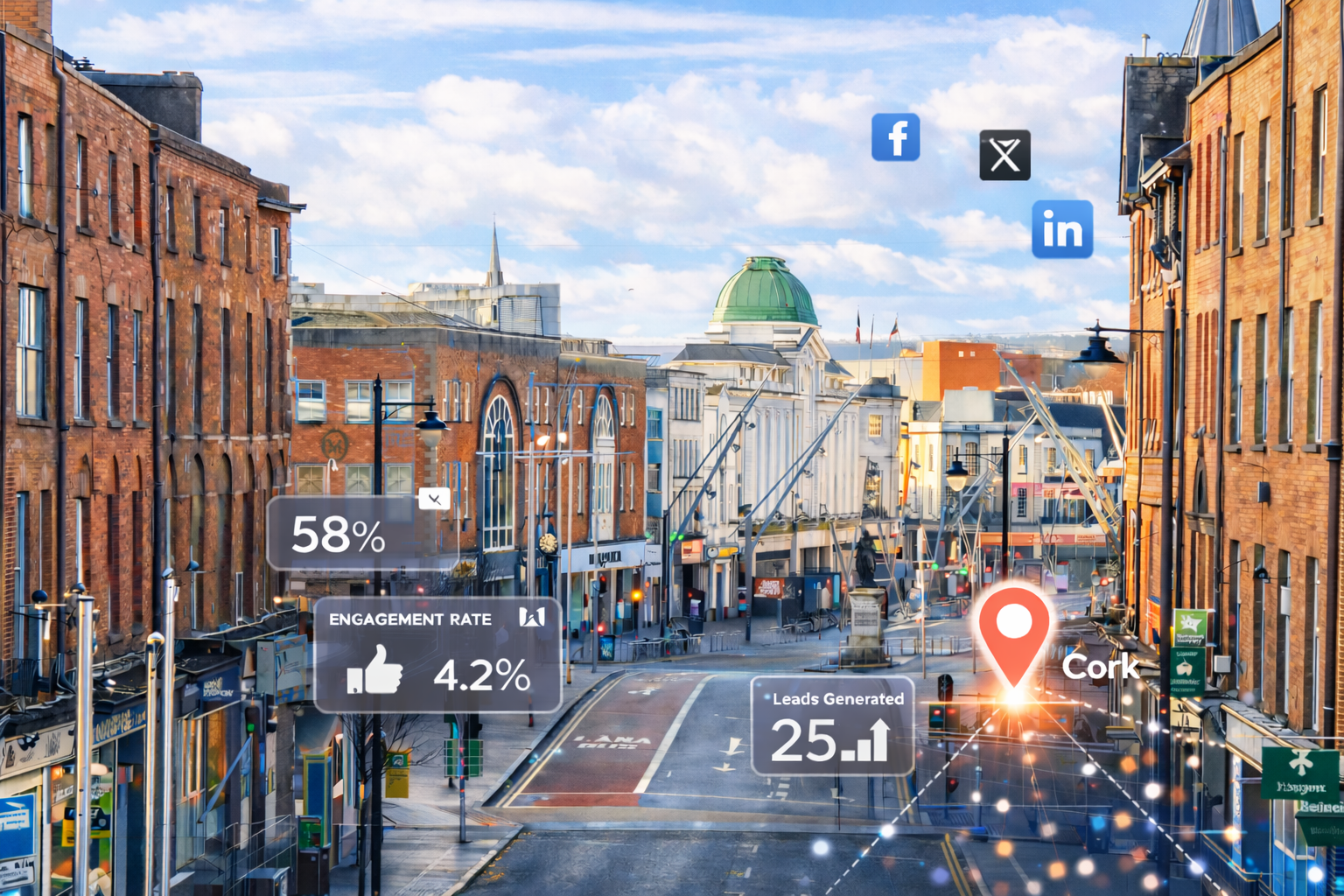
Busy St. Patrick's Street in Cork City representing the target audience for social media lead generation strategies.

Busy St. Patrick's Street in Cork City representing the target audience for social media lead generation strategies.

Aligning Your Social Media and Website for Better Leads

While social media is excellent for grabbing attention, it rarely closes the deal by itself. Instead, it should act as a bridge leading users toward your website, where you offer more detailed information and clear contact options. This means your social posts should encourage visitors to explore your site through blog articles, service pages, or downloadable resources.

For instance, a software company might post a short video demo on LinkedIn with a CTA inviting viewers to try a free consultation available on their website. The website page then provides additional details and a straightforward form to book a session. When social content and web pages complement each other, visitors receive a coherent message that builds confidence and reduces friction in the sales process.

A Practical Social Media Strategy for Lead Generation

To build a social media marketing plan focused on generating business leads, start by defining what success looks like for your brand. Are you trying to increase direct inquiries, boost newsletter signups, or promote a new service? Next, research your target audience’s habits and preferences on each platform.

Develop a content calendar that balances educational posts, customer stories, service explanations, and calls to action. Track your efforts by measuring clicks, website visits, form completions, and other tangible results—not just likes or shares. Over time, refine your approach based on what content and platforms perform best.

For example, a B2B consultancy might find LinkedIn articles and webinars drive more leads than Instagram posts. Conversely, a local boutique may benefit more from Facebook ads paired with Instagram stories showcasing new products.

How Expert Guidance Can Help

Many businesses find it challenging to design social media strategies that translate into real business outcomes. Working with specialists who understand how to align social media marketing with sales goals can make a difference. Agencies experienced in structuring campaigns around lead generation help create content that educates, builds trust, and encourages action.

By focusing on audience needs and providing clear pathways from curiosity to contact, your social media becomes a productive part of your overall marketing efforts.


Ready to grow your business?

Book now

Read More
Bart . Bart .

Finding the Sweet Spot: How to Balance Paid and Organic Social Media for Maximum Impact

Understanding Paid Social Ads and Organic Content

In the world of social media marketing, one debate frequently arises: should businesses concentrate more on paid social ads or prioritize organic social media efforts? While each approach has its benefits, relying entirely on one side often means missing out on the full potential of your online presence.

Paid social ads refer to the advertisements you pay to run on platforms like Facebook and Instagram. They allow precise targeting, so your message reaches people who are most likely to be interested in your product or service. Organic content, by contrast, includes the posts, stories, videos, or comments your business shares without paid promotion. This content helps build a lasting relationship with your audience.

The Purpose Behind Organic Social Media

Organic content shapes how your audience perceives your brand. It’s the storytelling part of social media where you can share your company's values, highlight customer success stories, or offer helpful tips related to your industry. For example, a local bakery might post behind-the-scenes photos of sourdough bread being made or share recipes that include their products.

Over time, this consistent sharing cultivates trust. Without a genuine, active presence, viewers might ignore your paid ads, wondering if the business is even responsive or engaged.

The Impact of Paid Social Ads

Paid social ads offer distinct advantages. They help businesses rapidly increase brand awareness, promote sales events, or test different marketing messages to see what resonates best. For instance, by running a Facebook Ad campaign targeted at young adults within a 20-mile radius, a gym can quickly attract new members.

Because these ads can be fine-tuned for demographics, location, and interests, the results tend to be more immediate than organic posts. However, their effectiveness depends heavily on how recognizable and trustworthy your brand already is.

Why Combining Both Makes Sense

When organic and paid strategies work in harmony, they complement each other. Organic content puts the groundwork in place, warming your audience up to your brand. Then, paid social ads amplify your well-received messages, reaching new customers while reinforcing brand familiarity with existing followers.

This balance reduces advertising costs because warmed-up audiences respond better. It also increases engagement rates since the message is more relevant and consistent.

Common Mistakes to Avoid

Some businesses jump straight into paid social ads without nurturing their organic channels. Picture a startup launching Facebook Ads but with barely any engaging posts on their profile — audiences may find this suspicious or unprofessional.

Others focus too much on organic content but forget to include clear calls to action or measurable goals. Without these elements, growth tends to stagnate.

In both cases, the lack of coordination between paid and organic efforts means missed opportunities and underwhelming results.

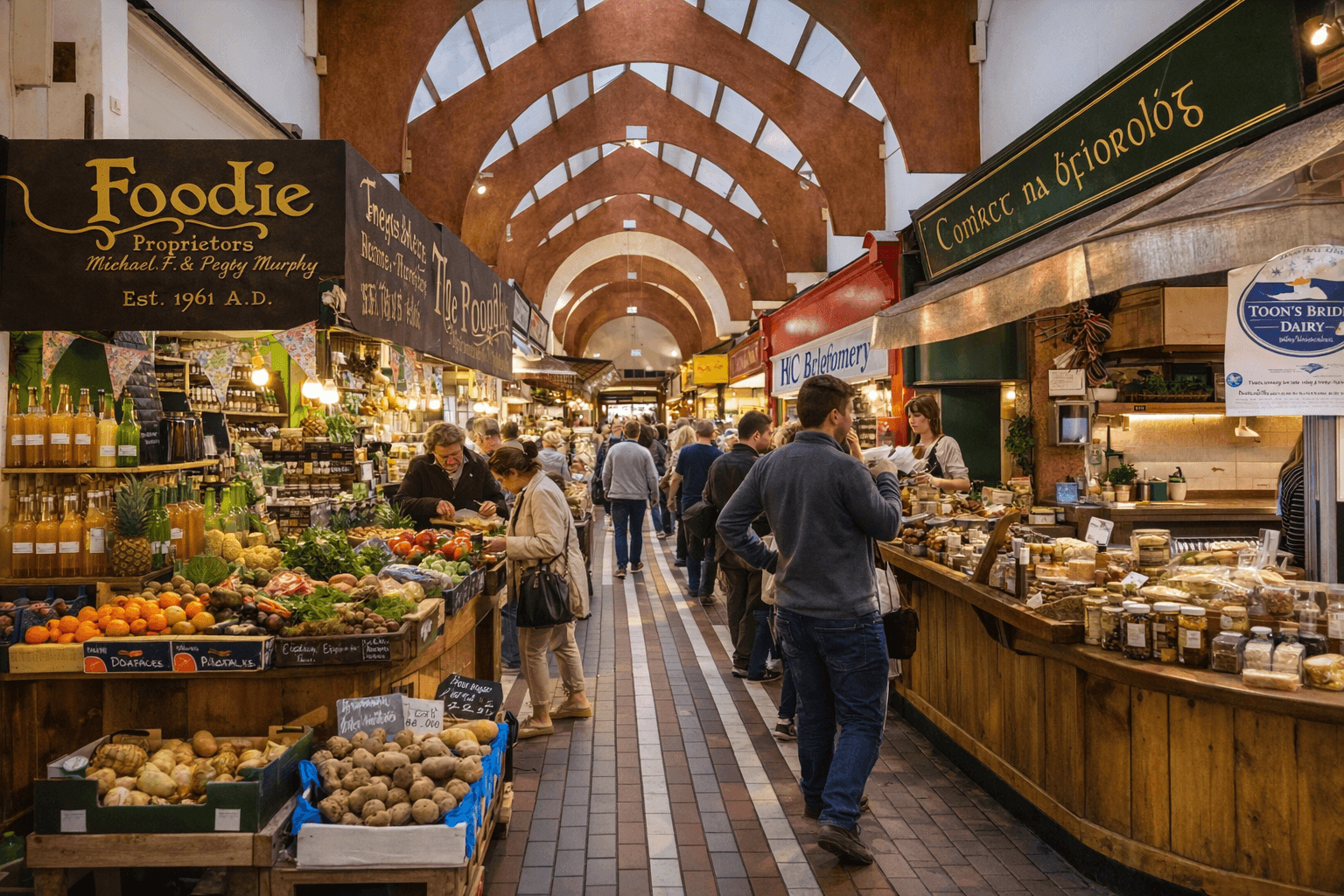
The interior of the bustling English Market in Cork. This image represents authenticity and relationship building, which are key elements of Claddagh Digital's organic social media strategy.

A wide-angle interior view of the historic English Market in Cork, featuring its iconic vaulted wooden ceiling and bustling stalls. This vibrant local hub serves as a metaphor for Claddagh Digital’s focus on building authentic, organic community connections

How Claddagh Digital Helps You Find the Right Balance

At Claddagh Digital, we understand that a successful social media strategy isn’t about choosing paid social ads over organic content, but about weaving them together effectively. We start by analyzing your current organic posts, identifying which types of content your audience finds most engaging.

These high-performing posts become the foundation for our paid campaigns, ensuring the ads reflect what your audience already values. For example, if a particular Instagram post about a customer testimonial performs well, we might boost that with targeted Instagram Ads to expand its reach.

This approach keeps messaging consistent and builds trust, making your ads less like interruptions and more like helpful recommendations.

Practical Tips for Integrating Paid and Organic Content

  1. Schedule Regular Organic Posts: Maintain a steady stream of organic content that provides value—whether it’s educational, inspirational, or entertaining.

  2. Test Ad Creative Based on Organic Success: Look at which organic posts get the most likes, comments, or shares, and model your ad content on those themes.

  3. Target Warm Audiences: Use paid social ads to retarget users who have engaged with your organic posts or visited your website.

  4. Measure and Adjust: Keep an eye on your ad performance alongside organic engagement to see what combination works best for your business.

For businesses looking to improve how they use Facebook Ads or Instagram Ads, blending these with a strong organic social media foundation can dramatically increase results.

To learn more about how paid and organic strategies can work together for your brand, explore our services.


Ready to grow your business?

Book now

Read More
Bart . Bart .

From Cobh to Cork City: Building Local Trust Through Social Media Consistency

For many businesses, social media feels like a chance to hit the jackpot with one viral post that suddenly brings widespread attention. The dream of going viral is enticing, promising rapid growth and sudden popularity. Yet, this excitement often overlooks an important truth: viral content is unpredictable and usually short-lived.

Instead, focusing on social media consistency—showing up regularly with content that clearly reflects your brand—creates more reliable and lasting benefits. This approach fosters trust and builds a genuine connection with your audience over time.

The Problem with Chasing Virality

Viral posts depend heavily on variables outside your control. Trends, algorithm changes, or the timing of a post can all dictate whether something spreads widely or not. When brands concentrate on trying to catch the next big trend, they risk losing their authentic voice.

For instance, a local bakery might jump into a viral challenge unrelated to baking just because it’s popular right now. While this might garner some likes temporarily, it could confuse customers about what the business really offers. Consistency suffers as messages become scattered and followers unsure about the brand’s identity.

Understanding Social Media Consistency

Consistency doesn’t necessarily mean posting every day. It means having a steady rhythm that your audience can expect, along with coherent messaging that aligns with your brand and services.

This includes:

  • Maintaining a recognizable tone of voice, whether warm, professional, or playful
  • Delivering clear and focused service information
  • Posting on a schedule you can realistically maintain
  • Using visuals and branding elements that feel connected

When these elements come together, your social media presence becomes a reliable reflection of your business values, making it easier for followers to engage and remember you.

Why Consistency Builds Trust

Trust forms through repetition and clarity. When your audience sees you consistently posting content that reinforces your expertise or values, they become more confident in reaching out or choosing your services.

Consider a local fitness coach who shares weekly workout tips, client success stories, and healthy meal ideas. Over time, followers will view the coach as an authority and feel comfortable investing in their services. This steady and authentic communication beats a one-off viral post that might be ignored the next day.

The Long-Term Impact of Consistent Posting

Regular social media activity helps your business stay on people’s minds. It improves engagement rates as followers begin to anticipate and respond to your posts. This ongoing interaction also helps paid ad campaigns perform better because your audience is already familiar with your brand.

Consistency is about gradual growth. It allows your business to adapt content based on what resonates with your audience, leading to sustainable social media growth rather than unpredictable spikes.

Practical Strategies to Maintain Consistency

Creating a content calendar can significantly ease the pressure of constantly coming up with ideas. Scheduling posts in advance ensures you have steady content without last-minute rushes.

Batch creating content—preparing several posts in one session—can make maintaining a regular posting rhythm easier. Don’t hesitate to repurpose existing content into new formats, such as turning a customer testimonial into a video or infographic.

Most importantly, choose a posting frequency that fits your business’s capacity. Rather than overcommitting and burning out, it’s better to post fewer times with meaningful content.

Planning a consistent social media strategy for your Cork-based business: A professional workspace featuring the iconic view of Cobh’s 'Deck of Cards' and St. Colman's Cathedral

How Claddagh Digital Helps Businesses Stay Consistent

At Claddagh Digital, we emphasize creating realistic and manageable content strategies that match each client’s resources and goals. Instead of pushing for daily posts or risky viral attempts, we focus on clear messaging, practical content planning, and achievable posting schedules.

By building a content calendar tailored to your business, we help you maintain consistency without feeling overwhelmed. This steady approach strengthens your brand presence while freeing you to focus on running your business.

The Bigger Picture: Why Consistency Wins Over Virality

While viral posts can get you noticed quickly, they rarely lead to dependable growth. Social media consistency may seem less flashy, but its effects build over time, creating a loyal audience and stronger connections.

When customers feel your brand is dependable and trustworthy, they’re more likely to engage regularly and become repeat clients. In contrast, chasing viral trends often leads to missed opportunities to build meaningful relationships.

Final Thoughts

Pursuing viral social media content can be tempting, but it’s important to recognize the limits of this approach. Building a brand on unpredictable spikes often leads to frustration and mixed messaging.

Instead, focusing on social media consistency allows you to develop a clear brand voice and steady audience engagement. This long-term strategy nurtures trust and encourages customer loyalty, making it the most effective path for sustainable growth.

Remember, social media success is about patience, planning, and showing up consistently with authentic content that reflects your business.


Ready to grow your business?

Book now

Read More
Bart . Bart .

Why Short-Form Video Marketing Matters for Businesses

Short-form video has quickly become one of the most popular formats on social media platforms, especially with tools like Instagram Reels shaking up how users engage with content. Businesses can no longer treat video as a nice-to-have — it’s now a core ingredient of their marketing efforts.

At Claddagh Digital in Cork, we help local businesses use short-form video marketing to attract more customers on Instagram and TikTok. We work with companies across Cork and Ireland who want to grow their brand using authentic, easy-to-create video content.

Videos grab attention more effectively than static images or text-heavy posts. Users often scroll through feeds rapidly, so capturing interest in the first few seconds is vital. Short videos let you deliver your message quickly and clearly, making it easier for potential customers to understand your products or services.

Overcoming Common Hesitations About Social Media Video

Many small businesses in Cork struggle with social media marketing, especially when it comes to video. Business owners often worry they won’t have the right equipment or the confidence to appear on screen. It’s also common to assume you need expensive cameras or fancy editing software to make a good video.

In reality, authenticity wins over polish. For example, a cafe sharing quick clips of daily specials or behind-the-scenes coffee brewing can be more engaging than a highly produced commercial. Smartphone cameras now offer high quality, and there are plenty of apps that simplify editing for beginners.

Another hurdle is fear of time commitment. Planning and producing videos might seem time-consuming, but short clips can be created in minutes once you know what to focus on. Starting with simple concepts, like answering common questions or demonstrating a product feature, can ease you into a routine.

Why Short-Form Video Connects So Well

One reason short videos are powerful is because they show tone and personality up close. For service-based businesses such as consultants or fitness coaches, video allows potential clients to get a sense of your style and professionalism before making a decision.

Moreover, short videos suit people’s content habits. Today’s viewers expect fast, entertaining, and informative content. Videos lasting 15 to 60 seconds match these expectations perfectly, increasing the chances that users watch all the way through.

Common Pitfalls and How to Avoid Them

Trying to create the perfect video on the first go often leads to delays and frustration. Over-scripting your message makes the content sound artificial. Instead, using conversational language that reflects how you usually speak can feel more natural to viewers.

Inconsistency is another frequent problem. Posting once and then disappearing means missing out on developing an audience. A simple content calendar—even posting one video a week—can help maintain steady engagement.

Another mistake is copying viral trends blindly. While popular styles can inspire you, using them without adapting to your brand voice or audience might confuse your followers or seem insincere.

Practical Video Ideas to Try Today

Here are a few easy ways businesses can start creating short videos:

  • Answer FAQs: Pick a common question customers ask and answer it clearly.
  • Simplify Services: Break down what you offer in easy-to-understand segments.
  • Share Tips: Offer relevant advice or hacks related to your industry.
  • Behind the Scenes: Show the people, processes, or tools behind your product.

These concepts don’t require scripts or staging—just focus on delivering helpful or interesting content.

Social media manager analyzing Instagram profile insights and growth on a smartphone at Cladagh Digital agency in Cork.

From on-site filming at landmarks like Saint Fin Barre's in Cork to editing, we handle your entire video marketing strategy

Making Short-Form Video Part of Your Marketing Mix

Video works best when it complements other marketing channels. For example, if your blog focuses on helpful insights, consider creating short videos summarizing blog posts to share on social media. This approach reinforces your messages without adding too much extra work.

Planning your video content around your existing themes helps keep things consistent. Mapping out topics monthly or quarterly can prevent last-minute scrambling and keep your channels active.

How Claddagh Digital Helps with Video Content in Cork

Creating effective social media video content can feel overwhelming.

As a digital marketing agency based in Cork, we specialise in helping Irish businesses build authentic video strategies that fit their goals, budgets, and available time.

We focus on making video content approachable by highlighting clarity and authenticity. Our team supports scheduling, planning, and producing videos that fit naturally with your brand and audience.

Whether you’re just starting out or looking to improve your current efforts, we offer guidance to create simple videos that deliver real results for businesses across Cork and Ireland.

Final Thoughts

Short-form video marketing offers businesses a practical way to engage audiences and build trust on social media. The format’s strength lies in its ability to communicate quickly and personally, meeting users where they spend much of their time today.

Whether you run a café, salon, gym, or service-based business in Cork, short-form video marketing can become one of your most effective tools for attracting local customers.

Starting with straightforward videos and maintaining a consistent presence will gradually build momentum and connections. Remember, it’s not about perfection but making videos that feel genuine and useful.

With platforms like Instagram Reels shaping the landscape, embracing video content has never been more accessible or valuable. Incorporate it thoughtfully into your marketing strategy, and you’ll open new doors for your business.


Ready to grow your business?

Book now

Explore more about enhancing your video presence through our services.

Read More
Bart . Bart .

How a Content Strategy Improves Social Media Results

Posting content regularly on social media does not automatically lead to better results. We see it often in Cork marketing: businesses publish posts consistently yet struggle with low engagement, minimal clicks, and no clear connection between social media activity and business growth.

In most cases, the missing element is not effort, but strategy.

A content strategy social media plan provides direction. It ensures that your activity supports clear goals rather than existing as a collection of unrelated posts. Without a strategy, your online presence becomes reactive and unpredictable.

What a Content Strategy Actually Is

A content strategy is not just a list of post ideas or a calendar filled with dates. It is a comprehensive framework that defines:

  • What you communicate.
  • Who you are communicating with.
  • Why each piece of content exists.

Effective content planning connects your daily messaging to broader business objectives, such as brand awareness, lead generation, or client education. It bridges the gap between a "nice post" and a business asset.

Why Strategy Matters More Than Frequency

One of the most common misconceptions is that posting more often leads to better performance. In reality, frequent posting without structure often leads to audience fatigue and inconsistent messaging.

Fewer, well-planned posts usually outperform high volumes of unstructured content. A solid strategy ensures that every post serves a specific purpose, preventing the "spray and pray" approach that wastes resources.

Building Strong Foundations: Content Pillars

Most effective content strategies are built around clear pillars. These themes keep your messaging focused and relevant. Common pillars include:

  • Educational Content: Answering common customer questions to build authority.
  • Social Proof: Sharing testimonials, reviews, or case studies to build trust.
  • Brand Insights: Showcasing your values, team, and unique approach.
  • Service-Focused Content: Explaining your offerings clearly and highlighting benefits.

How Strategy Improves Performance Over Time

When content is planned strategically, social media results become measurable. Instead of guessing what works, you can track specific metrics tied to your goals. Engagement patterns emerge, high-performing topics become clear, and content can be refined based on actual data rather than assumptions.

How Claddagh Digital Builds Content Strategies

At Claddagh Digital, we believe content strategies should be tailored to the specific needs of the business. The goal is not to follow generic templates, but to build realistic systems that support long-term growth. We help businesses move away from ad-hoc posting toward a sustainable, results-driven approach.

Final Thoughts

A content strategy transforms social media from a guessing game into a predictable system. Businesses that invest in strategy consistently achieve stronger and more sustainable results.


Ready to transform your social media presence?
Stop guessing and start growing with a tailored plan.

View Our Social Media Strategy Services

Modern wooden desk with structured social media content calendar planner, laptop and pen in Claddagh Digital office in Cork
Read More
Bart . Bart .

Social Media Management for Local Businesses in Cork

Running social media for a local business in Cork is a bit different from handling accounts for big brands that cover the whole country or beyond. People around here notice if a business feels genuine and easy to connect with. They don’t usually care about viral posts or the latest online crazes. That personal touch is where good social media management really shines.

A lot of businesses in Cork treat social media like an afterthought. Posts go up when someone has time, messages change week to week, and content rarely matches what the business is actually trying to do. This often leads to frustration and the feeling that social media is just not worth the hassle. But usually, the problem isn’t social media itself — it’s the way it’s handled.
 Why Cork Businesses Need Social Media
Have you ever looked for a service or product around Cork and checked out the business’s social media first? You’re not alone. Social profiles these days matter a lot when people decide who to trust. When a business updates regularly and replies quickly, it feels alive and easy to talk to. But if an account hasn’t posted in months, or messages go ignored, you start wondering if they’re still open or care about customers.

For businesses in Cork, being visible with regular posts often makes the difference between being chosen or passed over.
How to Post Consistently
One big issue for local Cork businesses is posting without a plan. Content pops up at random times, the message isn’t clear, and no one really checks if anyone cares. Without a plan, it’s tough to figure out what works and what doesn’t.

Posting randomly often means mixed messages, little engagement, and wasted time. Cork businesses need more than just content — they need content that fits their customers and what they want to achieve.

So how do you keep it consistent? Aim for about three posts a week. That keeps your audience interested without feeling spammed. Make a simple calendar, maybe even use free tools like Google Calendar or Trello to jot down post ideas in advance. That way, you’re never scrambling last minute.

Also, think about when your customers are online. For example, posting lunchtime around 1 pm or early evening around 7 pm usually gets more attention because people are taking a breather, scrolling through their phones. Posting is one thing, but timing can make a noticeable difference.
What Good Social Media Management Looks Like
Good social media isn’t just about posting every day. It’s about telling a clear story that makes sense to your audience.

There are a few parts to this:

1. Clear messaging: Explain what your business does, who it helps, and what makes you different. For example, a family bakery in Douglas might focus on homemade recipes, local ingredients, and friendly service.

2. Content planning: Have a realistic calendar so posts aren’t rushed or random. Plan your photos, videos, or text posts ahead of time.

3. Community engagement: Reply to comments and messages quickly. In Cork, people appreciate when local businesses chat back rather than leaving them hanging.

4. Performance checking: Look at which posts got more likes, comments, or clicks. This helps you see what your customers like and what’s working.

All this might sound like a lot, but once you get into a groove, it feels much less stressful.
Making Social Media Work for Cork Businesses
At Claddagh Digital, we work closely with Cork businesses to build social media routines that fit local needs. We focus on goals that matter, like booking more customers or building local awareness, not chasing pointless likes or followers.

Every plan respects the pace of Cork’s communities and what local customers expect.

Social media is best when it feels like a conversation, not a shout in the dark.
Final Thoughts
Social media management for Cork businesses is not about random posts or jumping on every trend. It’s about showing up regularly, sharing clear messages that matter to your customers, and building trust over time.

Done well, social media becomes a natural part of growing your business and connecting with people nearby who care about what you offer.

Learn more about our Social Media Management service:

https://www.claddaghdigital.ie/services/social-media-management


Cork city street with a local cafe and abstract social media connection icons, representing Claddagh Digital’s social media marketing and management services for local businesses in Cork and across Ireland.
Read More
Bart . Bart .

How a Thoughtful Social Media Strategy Transforms Your Cork Business

Posting often on social media does not automatically mean you are doing well. Many Cork businesses believe that just putting up content frequently will bring in customers or boost engagement. But without a clear purpose that ties directly to your business goals, posting can feel like shouting into the void with no real response.

A social media strategy is the plan that answers important questions: What type of content should you share? Why are you sharing it? And who exactly are you trying to reach in Cork or nearby areas? This kind of plan gives direction and avoids guessing games about what to post next. It acts like a map that helps you send thoughtful messages to the right audience.
Why Focus on Strategy, Not Just Volume
Many businesses think that more posts equal better results. The reality is quite the opposite. Posting less but making sure each post connects with your audience in Cork will get better engagement and results. Think about sharing helpful insights or stories about your local business instead of flooding timelines with random updates. Quality beats quantity every time.
Building Strong Content Pillars
A content strategy often revolves around a few main themes or pillars. For example, you might create posts that teach your followers something new about your industry. You could share testimonials or case studies that show your business’s credibility. Posts reflecting your values help build trust, while promotional offers can drive people to take action. These pillars give your Cork social media presence consistency and make your content more meaningful.
Measuring Success and Adjusting in Cork’s Market
With a clear strategy in place, tracking what works becomes much easier. Look at engagement like comments and shares or conversion metrics that show if people are taking your desired steps. These data points help you adjust your future posts to better suit your audience in Cork. Over time, social media becomes less of a guessing game and more of a reliable marketing tool.

At Claddagh Digital, we understand the unique needs of Cork businesses looking for social media management. We don’t just post for the sake of posting. Instead, we create tailored strategies that take into account your goals, audience, and the best formats for different platforms. Our approach ensures each piece of content supports your business growth in the Cork digital marketing scene.

In conclusion, having a social media strategy turns random posting into a purposeful system that supports your wider marketing goals. It takes social media from unpredictable to a tool that helps your business grow steadily in Cork and beyond.
Top-down view of a professional desk with a content plan notebook, monthly calendar with sticky notes, laptop and coffee, representing Claddagh Digital’s social media content planning and strategy services for businesses in Cork.
Read More
Bart . Bart .

Why Strategic Social Media Management Is No Longer Optional for Growing Businesses

Social media management has become one of the most important growth levers for modern businesses. Customers no longer rely solely on websites or traditional advertising when researching a brand. Instead, they turn to social platforms to assess credibility, consistency, and professionalism.

A brand’s social media presence often forms the first impression. If that impression feels disorganised or outdated, trust is lost before any conversation even begins.

Social media as a trust signal

An inactive or inconsistent social media presence can quietly undermine trust. When potential customers see outdated posts, irregular activity, or unclear messaging, they begin to question how reliable and established a business really is.

Professional social media management ensures that every profile accurately reflects the brand, its values, and its standards — across all platforms.

Why random posting fails

Many businesses approach social media without a clear strategy. Content is posted sporadically, often based on guesswork rather than intent. While this can lead to occasional engagement, the results are usually:

  • Inconsistent

  • Difficult to measure

  • Impossible to scale

Without a defined plan, social media becomes a time-consuming obligation instead of a predictable growth system.

The benefits of structured management

Effective social media management is built on structure and purpose. Rather than posting for visibility alone, it focuses on:

  • Clear objectives such as brand awareness, lead generation, or direct sales

  • A consistent tone of voice and visual identity across all platforms

  • Content designed around audience needs, including their questions, problems, and objections

  • Regular performance analysis to refine what works and remove what does not

This structured approach transforms social media into a measurable and reliable marketing channel.

How this impacts business growth

Businesses that take a strategic approach to social media typically experience:

  • Stronger brand recognition and recall

  • Higher-quality engagement with ideal customers

  • Improved results and reduced waste from paid advertising

Instead of operating in isolation, social media begins to support — and amplify — the wider sales and marketing strategy.

How Claddagh Digital helps

Claddagh Digital works with businesses in Cork and across Ireland to design and manage social media systems built for sustainable growth. This includes:

  • Strategy and positioning

  • Content planning and creation

  • Profile optimisation and branding

  • Performance tracking and ongoing optimisation

The goal is simple: to ensure every post and every campaign supports clear, measurable business outcomes.

Conclusion

Social media management is no longer optional. In a market where customers actively research and compare brands online, a strategic and consistent presence is essential.

When done properly, social media becomes a powerful driver of long-term, measurable business growth — not just another item on your to-do list.

If you are ready to turn your social media into a structured growth system, discover how Claddagh Digital can help:
Social Media Management Services – Claddagh Digital

Modern desk with laptop displaying social media analytics dashboards for Claddagh Digital social media management in Cork
Read More
Bart . Bart .

Is social media management worth it for small businesses in Cork?

Many small business owners in Cork ask the same question:
“Is social media really worth the time and money?”

Between running a business, managing staff and serving customers, social media often becomes something you deal with “when you have time”. Posts go up irregularly, content lacks direction, and results feel unpredictable.

In this article, we’ll explain when social media management makes sense for Cork businesses — and when it doesn’t.

Why social media matters for local businesses in Cork

Today, customers don’t just discover businesses by walking past a shop or hearing about them from friends.
They check Facebook, Instagram or LinkedIn first.

An active and professional social media presence helps local businesses:

  • build trust before a customer makes contact

  • show credibility and consistency

  • stay visible in a competitive Cork market

For many people, your social media profile is the first impression of your business — sometimes even before they visit your website.

When social media management is worth it

Social media management makes sense if:

  • your business relies on local customers

  • you don’t have time to post consistently

  • you want your online presence to support real business goals

Posting once every few weeks rarely delivers results. Social media works best when there is a clear plan, consistent activity and messaging aligned with your brand.

For many Cork businesses, outsourcing social media management removes stress while improving results.

When it might NOT be the right time

Social media management may not be the right step if:

  • you expect instant results within days or weeks

  • your business offer is not clearly defined yet

  • you are not ready to commit to consistency

Social media is not a quick fix. Honest expectations lead to better outcomes and long-term success.

What results can small businesses in Cork expect?

For most local businesses, results don’t look like overnight viral success.

Instead, realistic results often include:

  • increased profile visits

  • more enquiries over time

  • stronger local brand recognition

Social media works gradually, but when done properly, the effects are long-lasting and compound over time.

Should you manage social media yourself or outsource it?

Managing social media yourself can work at the beginning. However, as a business grows, time and strategy become limiting factors.

Outsourcing social media management gives you:

  • a clear content plan

  • professional visuals and messaging

  • consistent posting without pressure

This allows you to focus on running your business while your online presence is handled professionally.

Final thoughts

Social media management is worth it for many small businesses in Cork — but only when it’s done properly.

If you’re unsure whether your current social media efforts are helping or holding you back, a professional audit can provide clarity and direction.

Learn more about our Social Media Audit service:
https://www.claddaghdigital.ie/services/social-media-audit

Small business owner in Cork checking social media notifications on a tablet, representing social media management services.
Read More